| Specification Attribute | Manufacturer Measurement / Data Point | Real-World Application Implication |
|---|---|---|
| Width | 60 Inches (5 Feet / 152.4 cm) | Perfect for wide items like storage totes, tires, and toolboxes. |
| Height | 84 Inches (7 Feet / 213.4 cm) | Takes full advantage of vertical room height in standard garages. |
| Depth | 24 Inches (2 Feet / 61 cm) | Deep storage footprint, allows deep container stacking without overhang. |
| Total Weight Capacity | 3000 LBS (1360.8 kg) distributed load | Heavy machinery parts, engine blocks, and mass fluids storage. |
| Per-Shelf Capacity | 500 LBS (226.8 kg) evenly distributed | High density storage without center buckling or sagging over time. |
| Material Composition | Heavy Alloy Steel & Multi-Layer Pressboards | High tensile strength frame resists lateral shearing forces. |
| Finish | Anti-Rust Textured Powder Coating | Prevents oxidation in high-humidity basements and open shop environments. |
| Adjustability Grid | 1.5-Inch Increments via Slot-and-Lock System | Highly customizable vertical configuration for non-standard gear sizes. |
Visual Presentation and Footprint
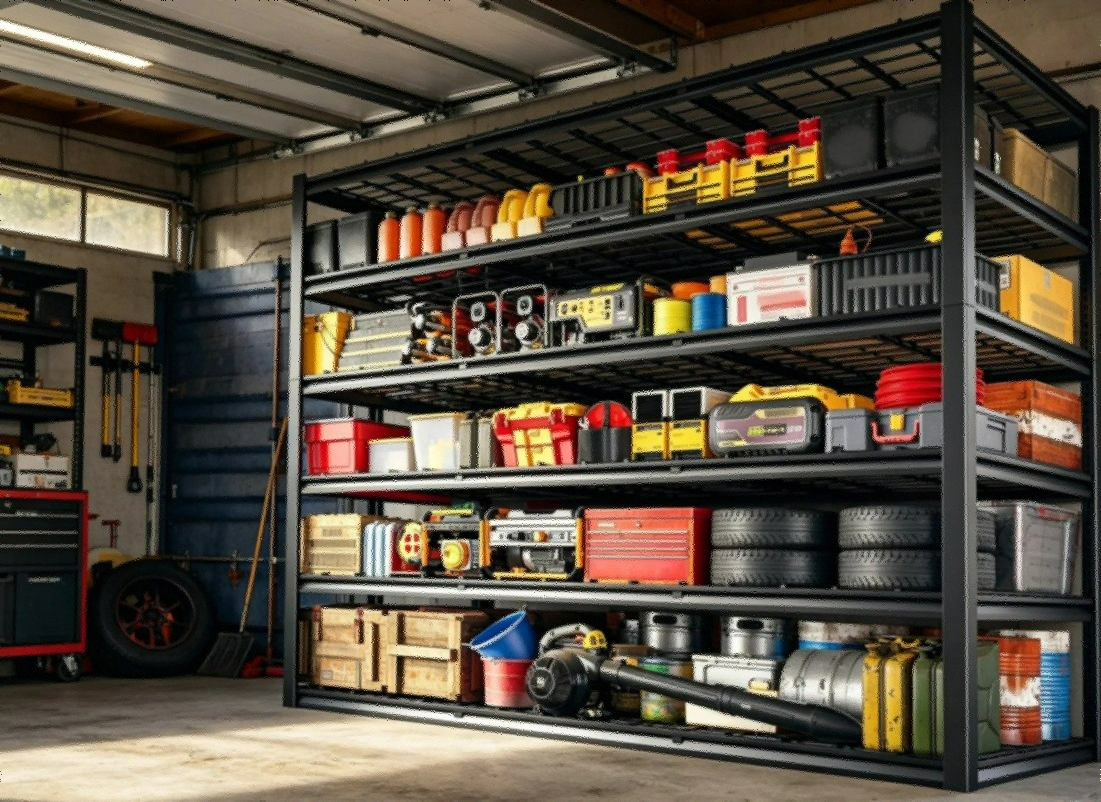
Look, it’s a shelf. But it takes up serious real estate. Before we get into the weeds, look at how this thing sits in an actual shop.
Notice the uprights. Most cheap racks use thin metal folded once and hope for the best. REIBII actually uses a double-welded interlocking seam on the corners. Meaning the weight actually travels down the column instead of snapping the joints the second you load it up.
See how the horizontal beams sit inside those recessed slots? The shelf stays flush with the metal frame. I can’t tell you how many bins I’ve shredded sliding them over raised metal lips on cheaper racks.
Material Quality and Structural Integrity Deep Dive
Steel Gauge and Framework Engineering
You buy a metal rack for the metal. Not the idea of metal. I’ve handled enough department-store junk to know when steel is paper-thin. This is structural alloy. You can torque the vertical beams by hand and they fight back. They stamped multiple bends into the uprights. It’s basic physics—every bend introduced to sheet metal exponentially increases its rigidity. That’s how it hits a 500-pound per-shelf limit without folding.
Powder Coating and Environmental Resilience See Today’s Deal on Amazon
Garages are awful environments. Temperature swings, spilled oil, whatever leaks out of that old battery you forgot to throw away. Standard paint chips off and rust takes over. This frame is powder-coated. Thermally fused matte black. Moisture from a damp basement just sits on top of it. Plus, the texture gives you some actual grip when you’re wrestling the heavy pieces together.
Analysis of the 3000 LBS Load Capacity: Fact or Fiction?
The Mechanics of Distributed Loads
3000 pounds sounds great on a box. But if you drop a 500-pound engine block dead center on one shelf, it’s going to bow. Maybe bend the rails. Manufacturers rate these for evenly distributed loads.
If you want it to hold that weight safely, put the heavy stuff—transmissions, floor jacks, fluids—on the bottom. Drop the center of gravity so you don’t pull the whole rig down on yourself.
Reinforcement Beams and Anti-Sag Engineering
Five feet is a long gap for a piece of steel. Put weight on it, it naturally wants to sag. REIBII fixed this by adding support bars under every single shelf tying the front and back together. Keeps it flat. Keeps it from twisting under pressure.
Assembly Process and Ergonomic Analysis
The Boltless Interlocking Design
I hate bolts. Racks with a hundred tiny hex nuts rattle loose the second you run a table saw nearby. This is entirely boltless. Heavy-duty tapered tabs slide directly into the corner posts. The more weight you put on it, the tighter the joint gets.
Step-by-Step Installation Realities
The box says ten minutes. Sure, if you’ve built ten of them today. Give yourself half an hour. Get a second pair of hands for the long 60-inch beams if you don’t want to lose your mind.
- Base Preparation: Dump it all out. Put the rubber feet on the bottom posts so you don’t gouge your concrete floor.
- Lower Box Assembly: Slot the lower rails in. Hit them with a rubber mallet. Make sure this base is fully seated and square, or the rest of the build will be miserable.
- Mid-Post Coupling: You hit the 7-foot height by stacking two 42-inch posts with a steel sleeve. Seat them all the way before moving on.
- Tier Customization: Figure out what you’re storing before you lock the shelves in. Leave a big gap at the bottom for shop vacs.
- Shelf Placement and Squaring: Drop the boards in. Check the corners. Done.
Flexibility: The 2-in-1 Workspace Transformation
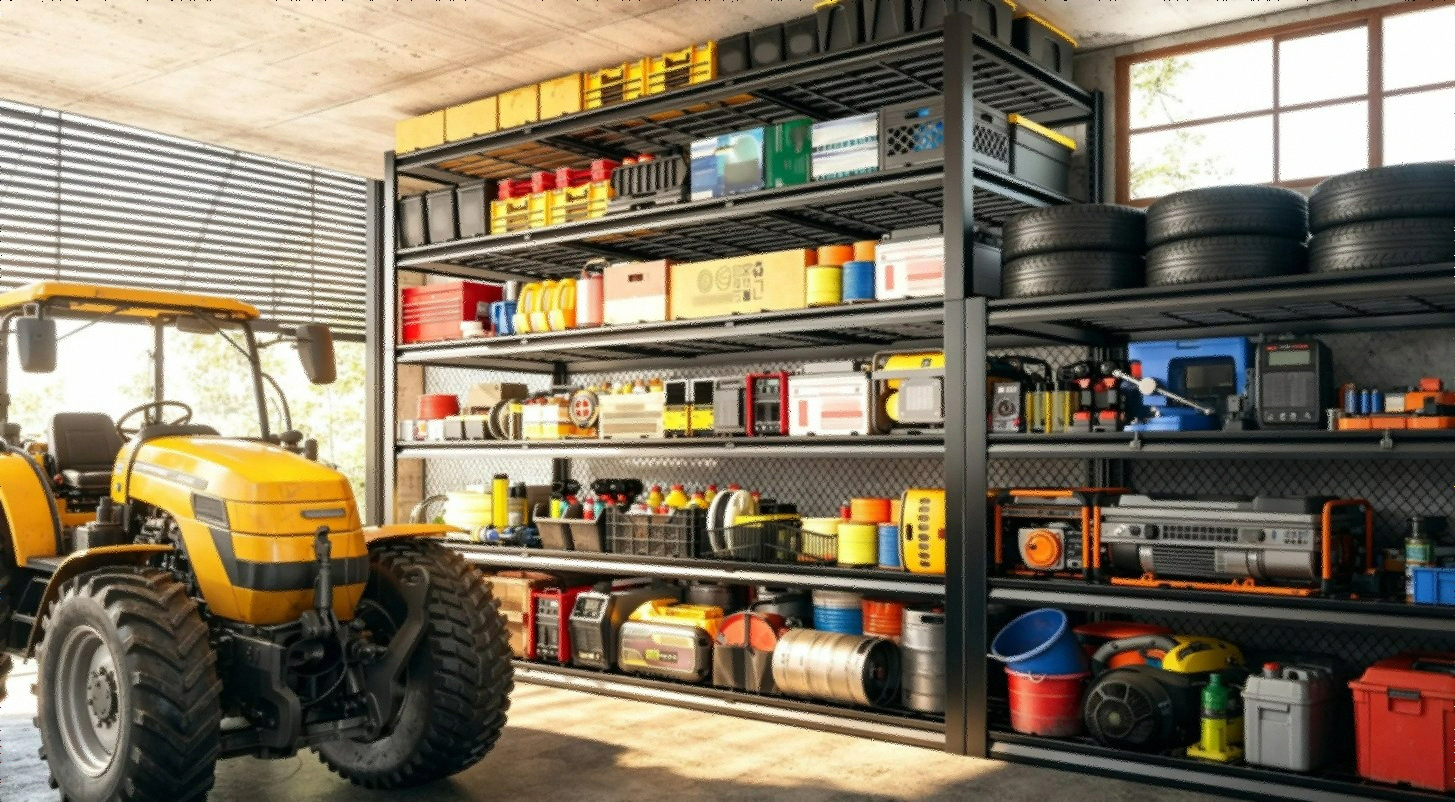
Since the uprights are split, you aren’t married to a 7-foot tower. You can break it into two separate waist-high benches.
- The Tall Vertical Tower (60” W x 24” D x 84” H): Packs everything vertically to keep your floor clear for vehicles or machinery.
- The Horizontal Workbench Setup (Two Units of 60” W x 24” D x 42” H): Gives you a massive surface area. Build stuff on one side, dump your chargers and tools on the other.
Advanced Storage Strategy: Maximizing Every Square Inch
I treat racks like an active workflow. Put the bulky automated gear and testing stuff up top so it’s out of the way but ready to grab when you need it.
Micro-Organization and Part Sorting
24 inches is deep. Don’t waste it. Shallow organizers for screws up front. Heavy tools and seasonal junk in the back. Use the depth or you’re just paying for air.
Labeling and Visual Management See Today’s Deal on Amazon
Stop looking for things. Group your plumbing, electrical, and auto stuff and slap a label on the shelf. The black metal makes white magnetic labels pop so you can see them across the shop.
Workplace Safety, Stability, and Best Practices
Center of Gravity and Tipping Prevention
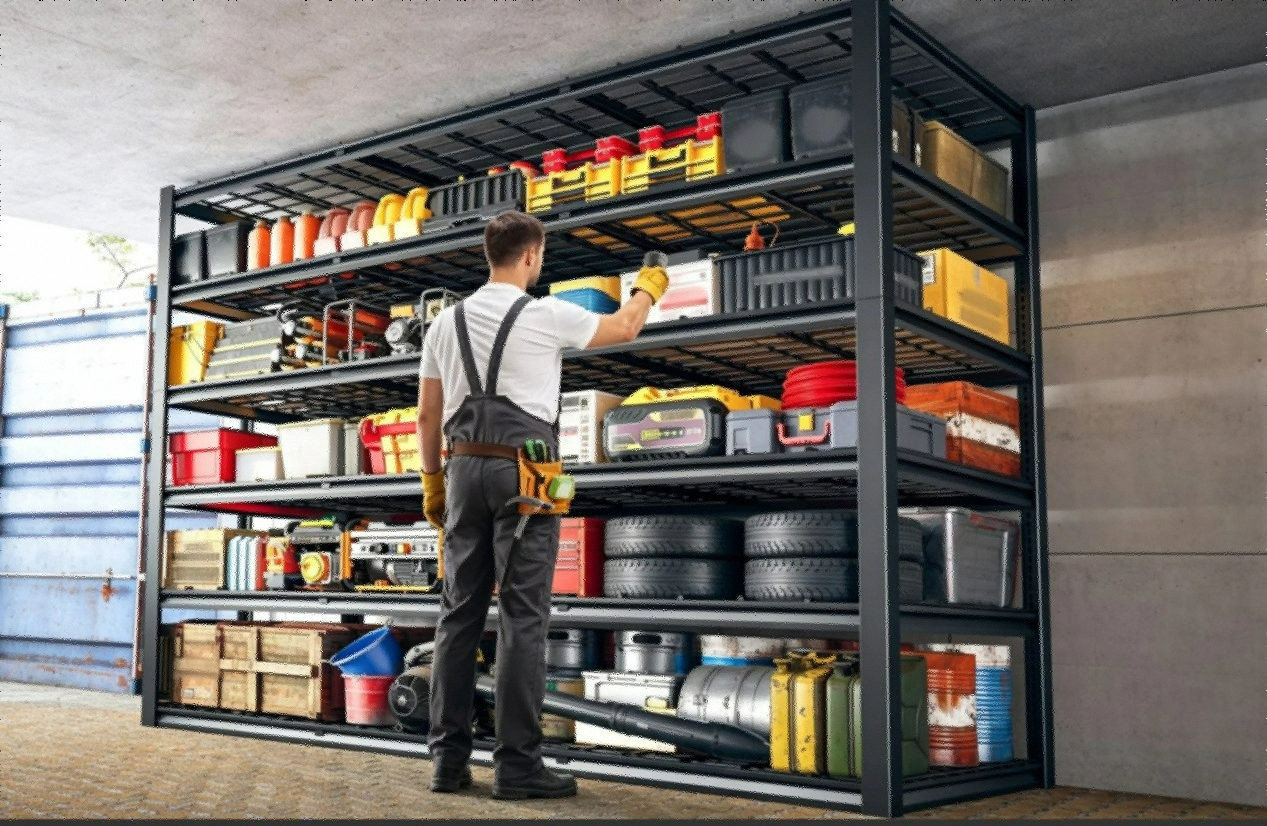
An 84-inch rack will kill you if it tips. 24 inches deep is a solid footprint compared to cheap 12-inch racks, but don’t be stupid.
- Always load the heaviest items on the bottom.
- Don’t climb the horizontal beams. Get a stool.
- Bolt it to the wall if you have kids running around or drive a forklift.
Proper Anti-Tip Wall Anchor Installation
It comes with anchors. Use them. Sink the heavy-duty lag screws straight into the wall studs behind the top frame. Do that, and it’s not moving.
Long-Term Maintenance and Durability Tracking
Once a year, give it a look to make sure it’s doing its job.
- Check Joint Seating: Hit the corners with a mallet to make sure floor vibrations haven’t walked the tabs out of the slots.
- Inspect Board Surfaces: If you’re in a swampy basement, make sure the pressboards aren’t swelling.
- Verify Alignment: Put a level on it. Shim the feet if your garage floor slopes for drainage.
Comparison: REIBII vs. Wire Racks vs. Plastic Shelving
Plastic Shelving Units
Plastic is cheap and won’t rust. It also sags permanently if you leave a heavy toolbox on it. It cracks in the cold. Keep plastic for garden hoses, not heavy tools.
Welded Wire Racking
Wire racks are great until you try to store loose bolts or a bottle of oil. Everything tips over or falls through unless you buy liners. And the wire bows under heavy point loads. Solid shelves win for a real shop.
Final Verdict: Is the REIBII 60” W 6-Tier Unit Worth It?
If you need serious, heavy storage, yes. It works.
Pros
- Substantial Storage Volume: 60x24 holds massive bins easily.
- Excellent Stability: Cross braces stop the sag.
- Modular Configuration: Build it tall or split it.
- Durable Finish: Powder coating beats paint.
- Tool-Free Assembly: Mallet only.
Cons
- Substantial Package Weight: The box weighs a ton. Get help moving it.
- Requires Firm Mallet Taps: You really have to wail on it to seat the tabs properly.
Acquisition and Availability
You can get the whole rig shipped directly to you.
Secure your industrial storage upgrade here: Purchase the REIBII 60” W Heavy Duty Garage Shelving Unit on Amazon.
Real-World Deployment Case Studies: Organizing Distinct Workspaces
Scenario 1: The Commercial Automotive Detailing and Repair Shop
Shops run out of space fast. Line four of these up against a wall. Iron blocks and floor jacks on the bottom, detail sprays and pads at eye level. The powder coat shrugs off brake cleaner and oil splashes.
Scenario 2: The High-Humidity Residential Basement Conversion
Basements are wet. Cheap pressboard rots. This steel frame doesn’t care. Keeps holiday boxes and emergency water off the concrete where flooding can’t reach it.
Scenario 3: The Dedicated E-Commerce Warehouse and Fulfillment Center
Warehouse packing needs volume. Five feet wide fits three standard 18-inch bins perfectly across. Adjust the shelves every inch and a half to fit whatever inventory just showed up.
Frequently Asked Questions (FAQ)
Q1: Can the REIBII 60” W unit be anchored to metal studs instead of wood studs?
Yeah, just ditch the wood lag screws it came with. Buy self-tapping sheet metal screws and hit the center of the stud channel.
Q2: What tools are required for the assembly process?
A rubber mallet. That’s it. Don’t use a framing hammer unless you want to chip the powder coat and bend the tabs into useless shapes.
Q3: Is it possible to buy extra individual shelves to add to this unit?
Six tiers is usually enough for 84 inches. But if you’re storing reams of paper or sheet metal, you can order extra beams and boards directly from them.
Q4: How do I adjust shelf heights once the entire unit is assembled?
Pull the board out. Hit the beams upward from the bottom with your mallet until they pop out of the slots. Move them, hit them back down, put the board back.
Q5: Can I attach caster wheels to the bottom of the upright posts to make the unit mobile?
No. It’s meant to hold 3000 pounds flat on the floor. Throwing wheels on it introduces a weak point and wrecks the weight limit. Leave it stationary.
Q6: How does the unit handle extreme cold in unheated winter workshops?
It’s steel. It handles sub-zero temperatures fine. It won’t shatter like plastic will in a dead-winter shed. See Today’s Deal on Amazon